
Basic Fundamentals
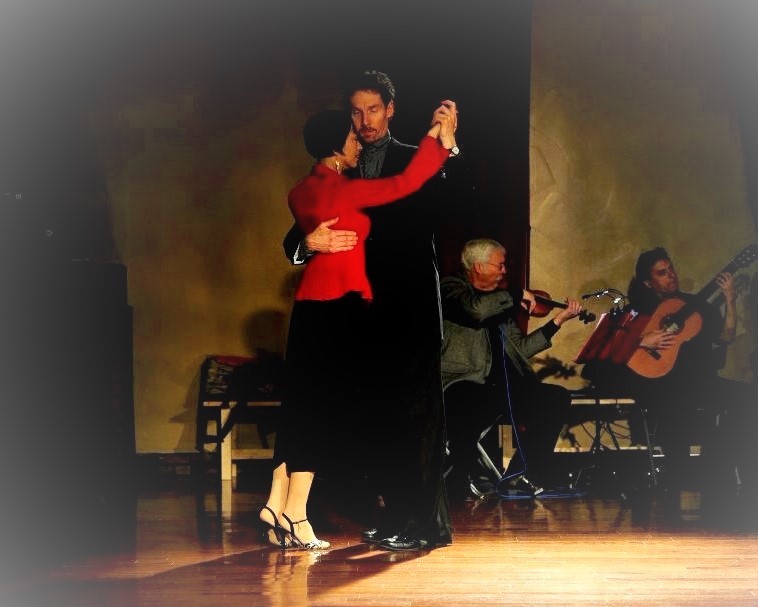
The Foundation – An Argentine Tango Syllabus
Lesson Topic
1. Introduction. Tango the music. Tango the dance. Nonverbal body language. Walking. Starting, stopping and changing weight. Posture, attitude, and the embrace; how it works and how to make it work. Rhythmic elements and beginning turns. Etiquette: The Elements of Tango.
2. Tango Turns I. Review. Accumulating turns to the left. Timing. Making turns flow. Skillful navigation. Practice exercises. Etiquette: line of dance, floorcraft, dance lanes and navigation.
3. Tango Turns II. Review walking and turning to the left. Turning to the right. The blind side and how to cope with space issues. Combinations. Etiquette: musical structure at milongas: tandas and cortinas.
4. Ocho Cortado. Review turning to the right. Forward walking for followers. Cutting and reversing the turn. The forward cross and pivot cross. Fun variations and frequent combinations. Etiquette: the cabeceo: asking for, accepting and refusing dances.
5. The Tango Cross. Review walking and tracks. Walking refinement. The Cross. Timing. Musical phrasing and the 8-count basic. Etiquette: cabeceo practice. Extrication.
6. Tango Classico. Review. Basic forward ocho. Front ocho resolution from the cross. Pausing elements, musical phrasing and timing of pauses. Etiquette: milonga codes: beyond the cabeceo.
7. Cross System. Why and how it works. Entering and exiting. Highways-or tracks for cross system. Back and front ochos in cross system. Turning ochos and navigation. Etiquette: personal hygiene, fragrance, hairspray, etc.
8. Cross-system cross. Review the cross and cross system walking. The cross-system cross and resolution. Introduction to tango vals. Etiquette: accompanying one’s partner off the floor at the end of a tanda.
9. Cross system turns. Review turns. Turning in cross system. Combining elements. Etiquette: entering the dance floor.
10. Tango Vals. More on tango vals. Musicality. Dance elements that fit and do not fit well with tango vals. Combinations and practice. Etiquette: changing lanes.
11. Tango Milonga I – The Box. The music: “San Francisco” Milonga qualities: playful, grounded, rhythmic. Rhythmic walking. Walking turns. The Box. Variations. Etiquette: dance styles and partner selection.
12. Tango Milonga II – Moving sideways, crab-like. Reviewing milonga qualities. Line-of-dance and useful crab-like elements and variations. Combining elements. Etiquette: the milonga as a container.
NOTES:
Dance elements are presented first in an open embrace and then in a close embrace. Close-embrace social dancing is the focus of these lessons. (Everything presented in the class can be executed in close embrace.)
The syllabus is logical and ambitious. It presents the basics of social Argentine tango to enable participants to begin dancing socially as soon as possible. Beginning students frequently take the series more than once to integrate the concepts. Alternatively, for groups that wish to start at the beginning and progress together, the syllabus can be presented in more detail over a longer period of time.
Students are encouraged to practice! One can practice tango at home, at practicas, and at community milongas. Dancing with multiple partners facilitates learning tango.
The introductory 12-week beginning series typically repeats itself approximately three times between Labor Day and Memorial Day.
Group lessons have been canceled due to the COVID19 pandemic. Private instruction is available by appointment. To schedule, please call or text Mark directly at 801-979-1974. A dance partner is now required for private instruction.
 TangoRound