
Mark’s Tango Background
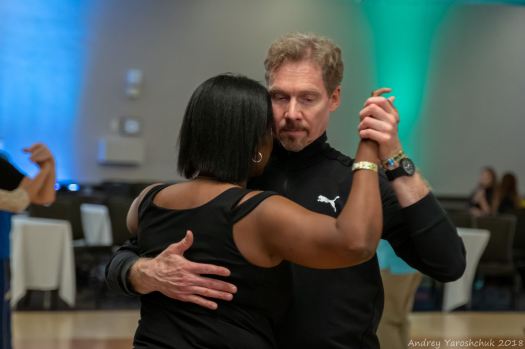
Mark and Lorraine began dancing Argentine Tango in the late fall of 2000 as a vehicle for reconnection following a personal tragedy. Their first local teacher, Steven Payne, was the principal organizer of the Utah tango community. Steven taught a close-embrace (milonguero-style) tango with an emphasis on partner connection, improvisation, and musicality.

When Steven and his family moved to Portland, Mark became the anchor and pivotal protagonist for tango in Utah. He immediately became an officer and, soon afterward, president of Wasatch Tango Club. He also began teaching introductory tango classes, organizing milongas, and creating tango presentations.
During this period, Mark was instrumental in organizing milongas at the Orbit Cafe, Green Street Social Club, McCune Mansion, Utah Museum of Art and History, Rose Sachs Gardens, Wasatch Broiler, Gallivan Center, and Salt Lake Center for Spiritual Living (SLCSL).
Mark began importing CDs from Zivals in Buenos Aires. He was DJ for many of the community’s early milongas and introduced traditional music structures (tandas and cortinas) to the local tango community. At Mark’s direction, milongas at the Salt Lake Center for Spiritual Living (SLCSL), at Gallivan Center, and at other locations, milongas began to feature live tango music with Daniel Diaz and his Tango Camerata (Daniel Diaz, bandoneon; Jeffrey Price, piano; Lynnette Thredgold, violin; Brian Salisbury, violin; occasionally with a base player; and with Alfredo Campelo on percussion or as the vocalist.)

By 2005, Mark had become more engaged with professional commitments and had begun encouraging others to take over some of the club’s organizational responsibilities. There were so few local teachers and tango classes at the time that he felt teaching would benefit the community more than serving as president of the Club. In January 2006, Mark began to teach regular, introductory, beginning, and intermediate-level tango classes at the Murray Arts Center, at the SLCSL, for several adult community education programs, and at the studio in his home. He and Lorraine continued to teach these classes, off and on, typically from September through May, until 2018.
Mark, Lorraine, Dmitry, and Irene Pruss hosted Milonga Sin Nombre monthly at Garbett Center for seven years, from the fall of 2013 until the pandemic curtailed dancing in early 2020. He also spearheaded a fund-raising effort in the late fall of 2017 that successfully installed a hardwood floor in the main (chapel) room, expanded and refinished the dance floor on the lower level, and made other improvements for the Garbett Center.

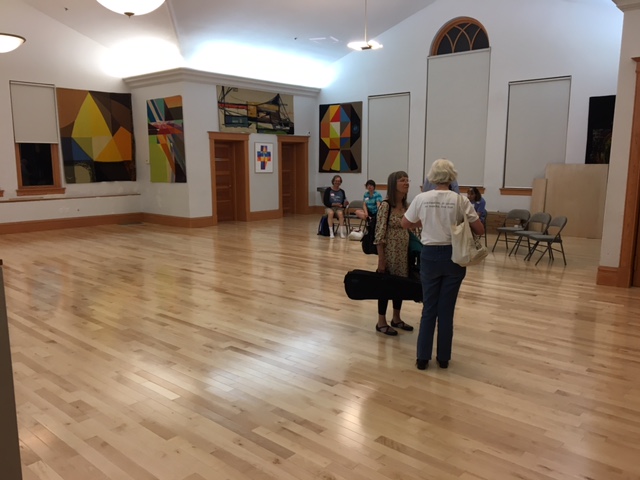
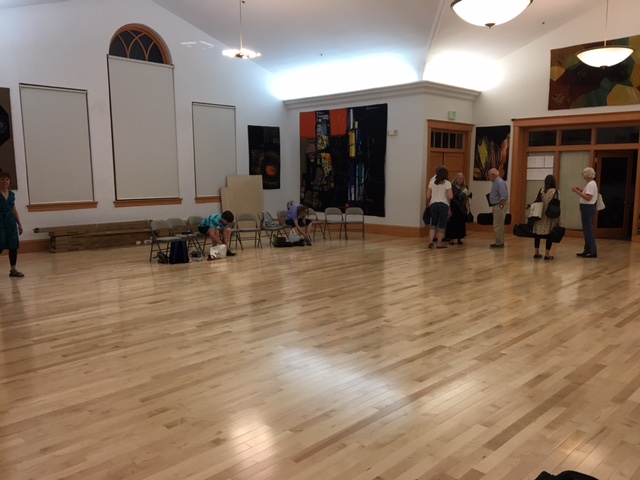
In addition, Mark & Lorraine are the founders of Pioneer Encuentro, an invitation-only, milonguero-style annual weekend event at the historic Ladies’ Literary Club (now The Clubhouse) on South Temple Street that brings more than a hundred out-of-state tango dancers to Salt Lake City every year.

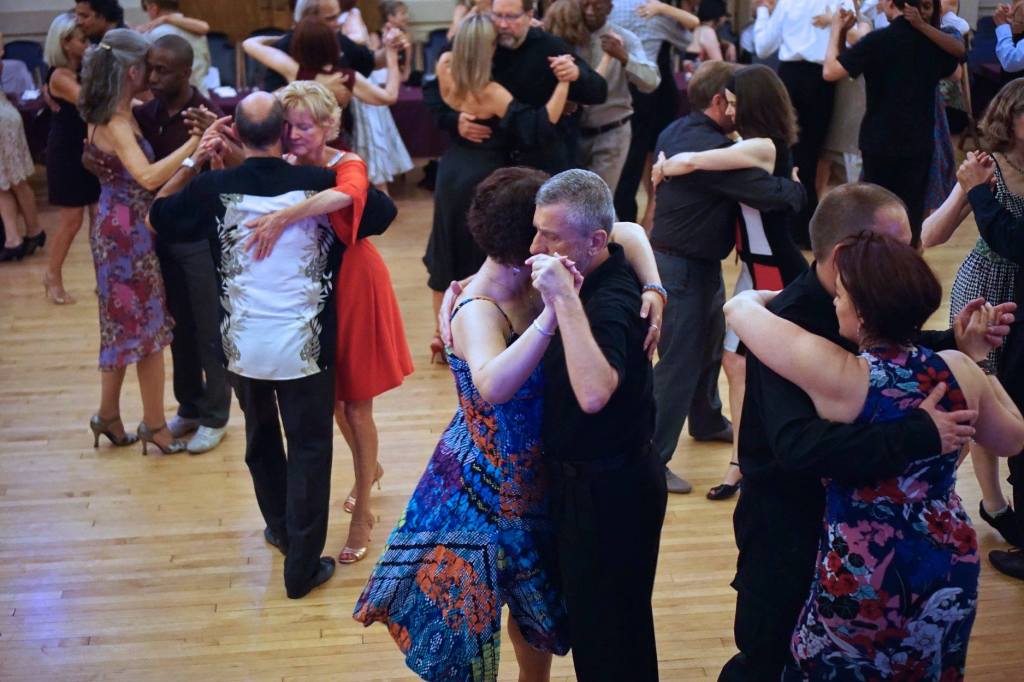
As a result of travel, sometimes for tango, but mostly for his profession, Mark now has danced and has tango friends in most major US cities. These include Albuquerque, Ann Arbor, Atlanta, Austin, Baltimore, Berkeley, Boulder, Boston, Chicago, Cincinnati, Cleveland, Columbus, Dallas, Denver, Eugene, Ft. Lauderdale, Ft. Worth, Honolulu, Houston, Indianapolis, Kanas City, Las Vegas, Los Angeles, Louisville, Maui, Miami, Milwaukee, Minneapolis, New Haven, New Orleans, New York, Oakland, Orlando, Philadelphia, Phoenix, Portland, San Antonio, San Diego, San Francisco, Seattle, St. Louis, Tampa, Tucson, Washington DC, and other cities.
In 2008, Mark, Lorraine, and friends from the Salt Lake community visited Buenos Aires and danced in many of the best-known and most historic milongas. This was an opportunity for them to test drive their tango background, and the experience was validating. Dancing with locals is a regular part of their itinerary for both domestic and international travel wherever they go. They’ve now danced with local tango dancers in Amsterdam, Budapest, Buenos Aires, Calgary, Montreal, Prague, Puerto Vallarta, and other cities.
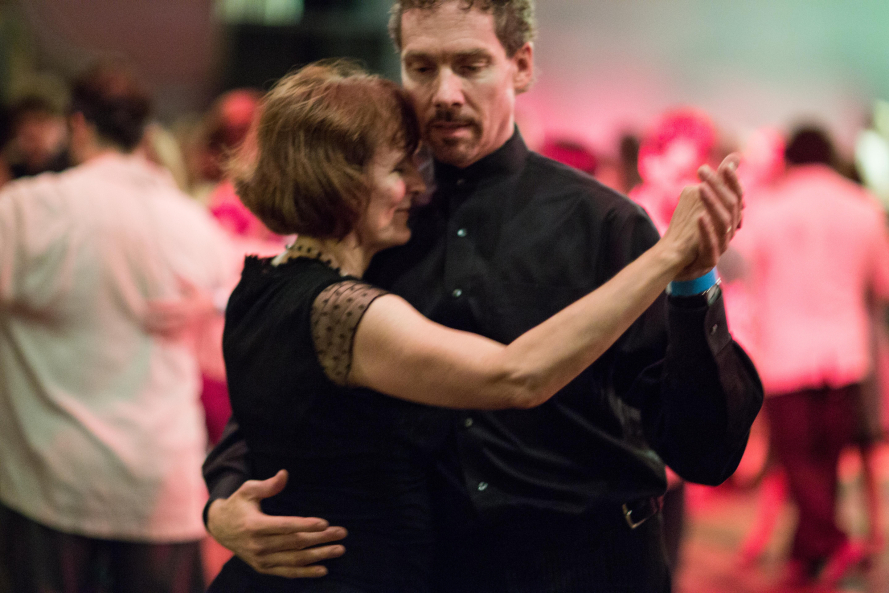
Mark and Lorraine’s dance continues to evolve. They now feel that tango is a continuum and no longer care to discriminate between dance styles but feel, instead, that how one dances should reflect the music, the available space, the connection one has with one’s partner, and the context or flow and energy of the dance floor. Although flexible, they remain fond of the close, organic, social dancing that still is found in many crowded Buenos Aires milongas and that focuses on comfort, respect, partner connection, musicality, and improvisation.
 TangoRound